A Standing Wave
Fig. 01 · Below a certain frequency the room stops being a space and becomes an instrument. · Photo: Jan van der Wolf / Pexels
Bass at low frequencies is not produced by the speaker alone — the room finishes the job, and often ruins it.
- The trade-off
- Dimensions you cannot change against seats and sources you can.
- Which way to spend
- Spend on placement before correction.
The Wavelength Problem
Sound is pressure variation travelling through air at roughly 343 metres per second. The frequency of a tone and its wavelength are locked together by that speed: divide 343 by the frequency in hertz and you get the wavelength in metres.
A 100 Hz tone has a wavelength of about 3.4 metres. A 50 Hz tone stretches to nearly 7 metres. A 40 Hz tone is longer than most rooms are wide.
That relationship is the whole problem. When a wavelength is comparable to a room dimension, the wave does not behave like a ray bouncing off surfaces the way a high-frequency sound does. It fills the space.
It travels from a boundary, reflects, and travels back — and if the timing works out, the outgoing wave and the returning wave reinforce each other into a standing pattern. Pressure builds at some points in the room and cancels at others. The pattern is fixed in space, tied to the room's geometry, not to where you aimed the speaker.
These are room modes, and the most straightforward kind — axial modes — are defined by pairs of parallel surfaces. A room 5 metres long will have a strong axial mode at roughly 34 Hz (half a wavelength fitting between the two end walls), another at 68 Hz, another at 102 Hz, and so on up through the harmonic series.
Every pair of parallel surfaces — length, width, height — generates its own family. Tangential modes bounce off four surfaces, oblique modes off all six; they are weaker individually but more numerous, and they fill in the frequency map in complicated ways.
2
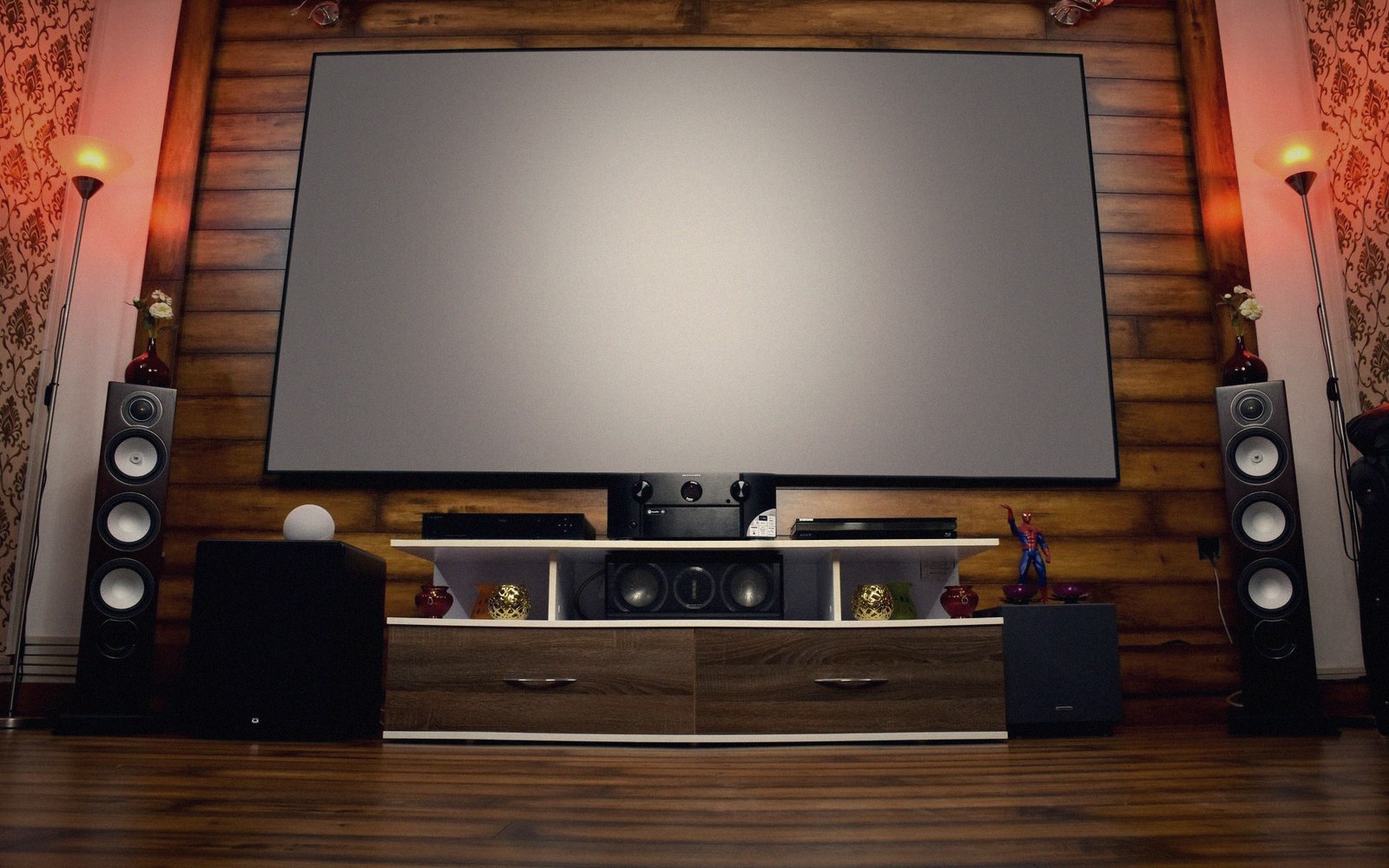
A corner loads the room hardest — useful for level, unhelpful for evenness.
Photo: Avinash Kumar / Pexels
What You Actually Hear
At the listening position, you hear the sum of the direct signal and every reflection, with each mode either adding to or subtracting from the level at that frequency. Move your head a metre forward and you land in a different region of the standing pattern — different pressure, different level.
This is why nulls and peaks in a room can be dramatic and disorienting: a frequency that seems completely absent from one seat is present and booming at another. Nothing is broken. The speaker is working. The room is the instrument.
The subjective result is unevenness. Certain bass notes hang in the air after the signal stops — the mode is still ringing, storing energy that it releases slowly.
Physicists call this a long decay time or high Q. You hear it as boom, overhang, one-note bass: the room imposing its own pitch on everything that passes through the bass range. Other frequencies sit in a null and seem thin or missing entirely.
Speaker placement changes which modes are excited and by how much. A subwoofer placed in a corner excites almost all axial, tangential and oblique modes simultaneously — it couples efficiently to every boundary — which is why corner placement produces maximum output and maximum unevenness.
Moving the source away from boundaries reduces coupling to some modes and leaves others relatively untouched. No placement eliminates them; placement determines which problem you have.
Lifted out of the flow — Bass
Key relationships
Seat position matters just as much. Sitting against the rear wall puts you in a pressure maximum for all axial modes along the room's length — guaranteed boom and uneven frequency response.
Moving forward improves matters, though trading one set of mode interactions for another. The practical approach is to try the speaker in several positions and measure rather than guess; the human ear is poorly suited to analysing its own adaptation to a room's coloration.
Treatment addresses modes only at the bass end when it is deep enough to be physically meaningful — a rule of thumb is that an absorptive panel needs to be at least a quarter-wavelength thick to work at a target frequency, which at 80 Hz means roughly a metre of material.
Genuine bass trapping is bulky, which is why it usually occupies corners (where modes concentrate pressure) rather than flat walls.
The clean summary: the speaker sets the signal into motion; the room decides what the bass sounds like. Understand the geometry first, before choosing drivers, tuning ports, or placement for any other reason.
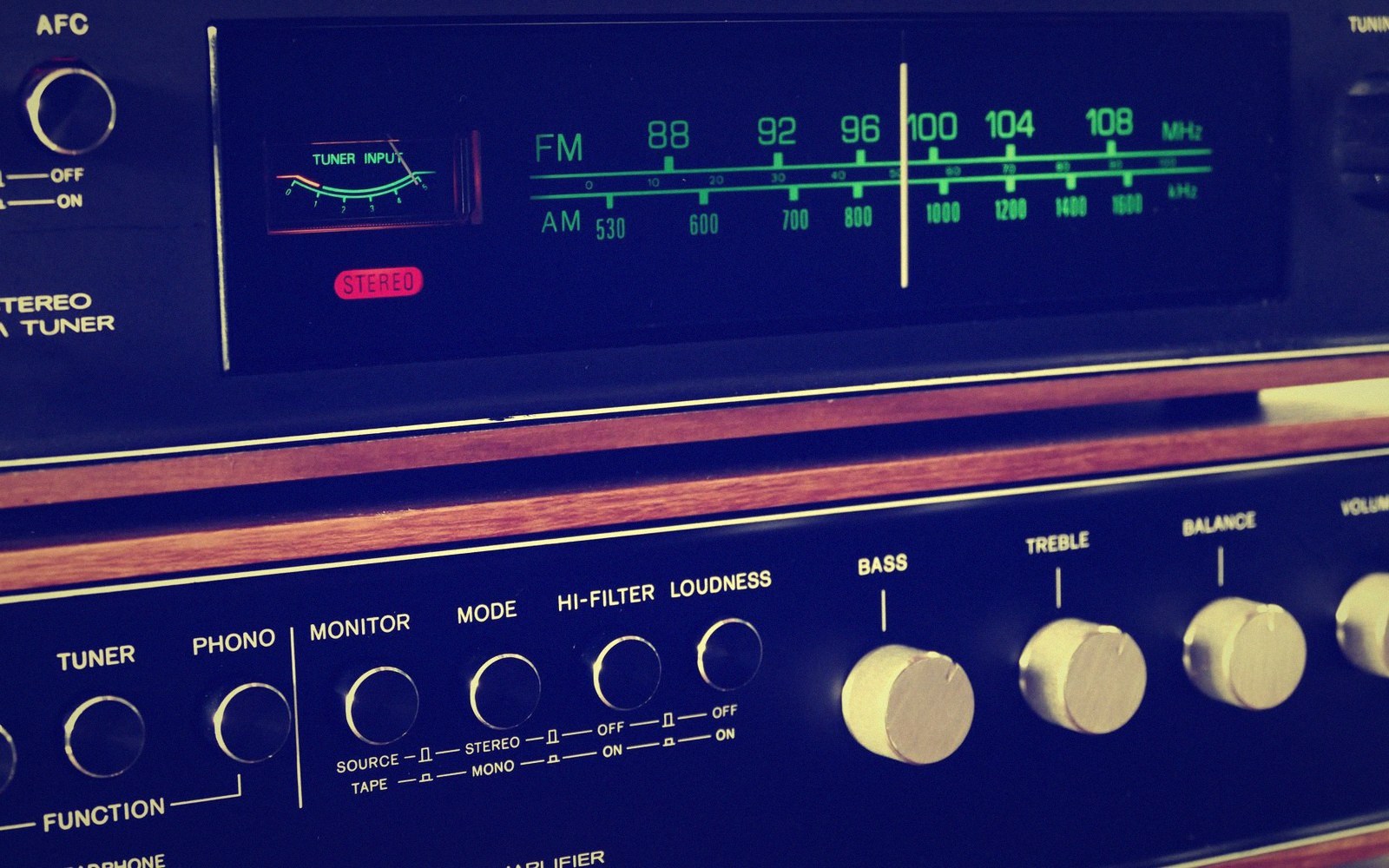
The last part of the chain worth worrying about, and the first part most people change.
Photo: Anthony 🙂 / Pexels
Moving forward improves matters, though trading one set of mode interactions for another.
Lifted out of the flow — Bass