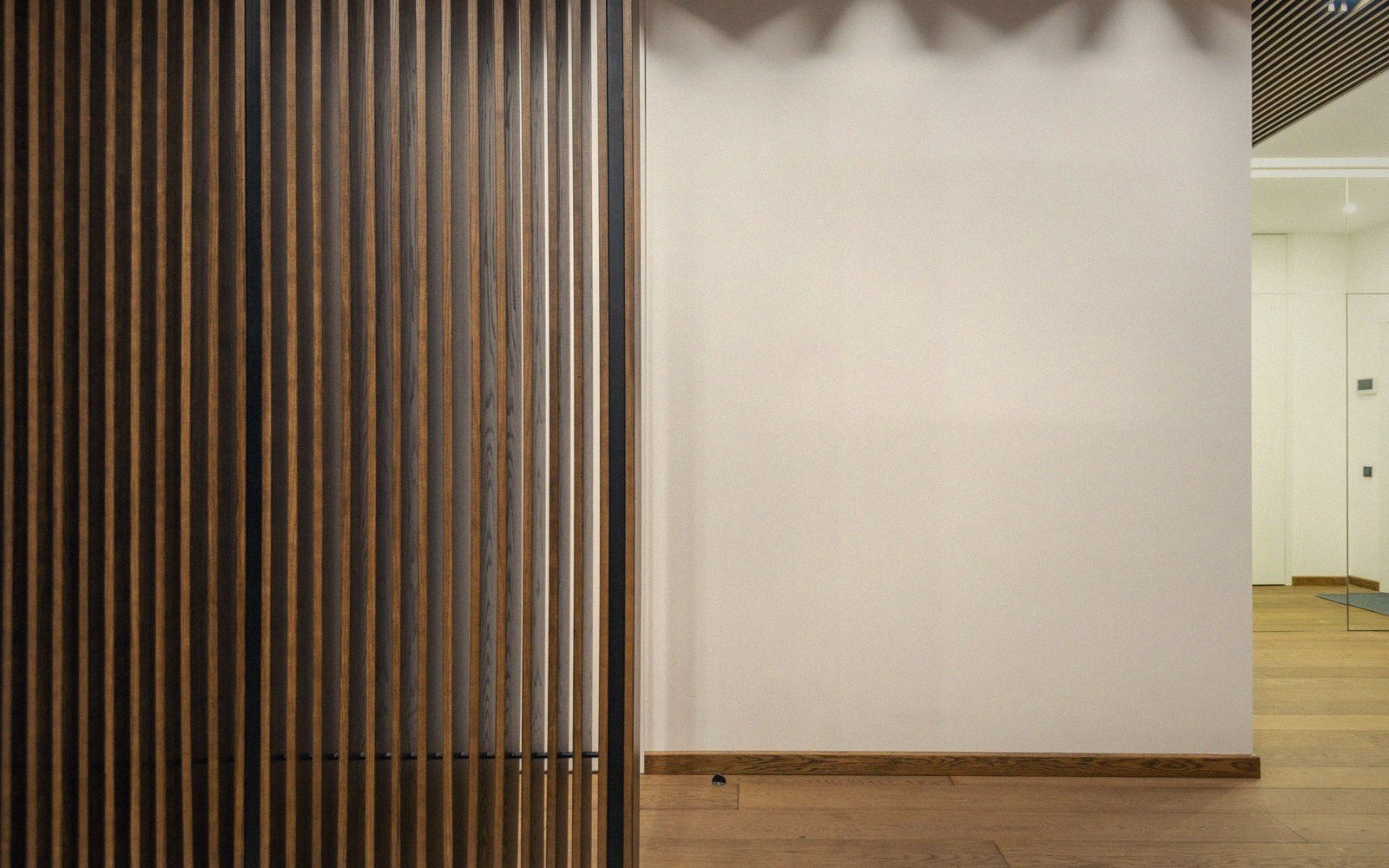
Absorb or Diffuse
Fig. 01 · Deaden it and it goes lifeless; scatter it and it stays alive. · Photo: Max Vakhtbovych / Pexels
Deaden a room completely and the picture loses nothing — but the sound becomes a tomb. Scatter well and the room stays alive; the trick is knowing which surface gets which treatment.
- The trade-off
- Clarity against liveliness.
- Which way to spend
- Spend on both, in different places.
The physics behind the choice
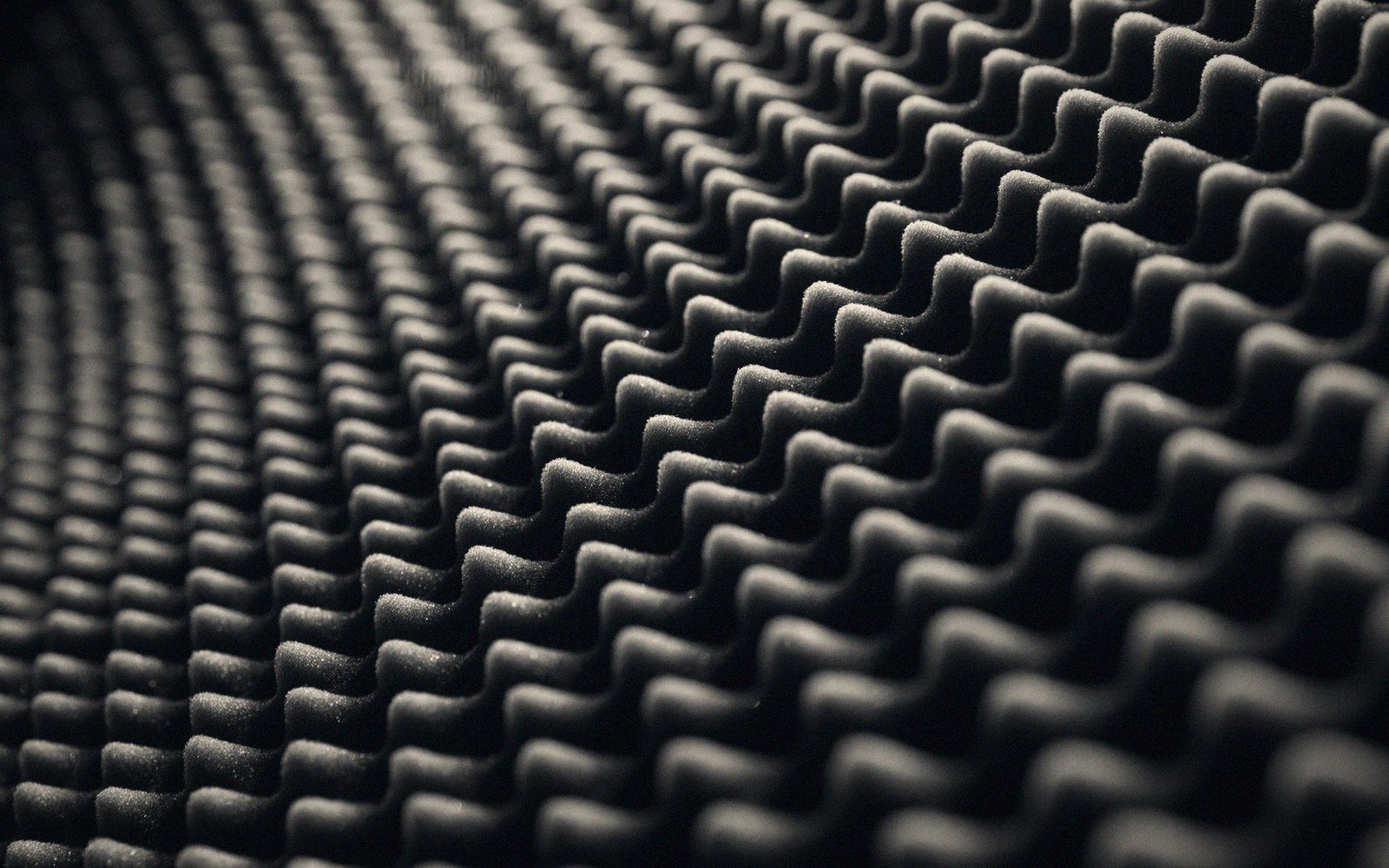
Absorption converts acoustic energy into heat. Every soft surface does it to some degree — carpet, upholstered seats, heavy curtains — but purpose-built absorbers, typically open-cell foam or rigid fibreglass panels, do it faster and across a wider frequency range.
The thicker the absorber, the lower the frequency it catches. A 25 mm panel barely touches anything below 500 Hz; a 100 mm panel starts to bite at 125 Hz.
Bass trapping — the dense, deep-fill panels that go into corners where pressure naturally accumulates — needs depth measured in hundreds of millimetres to make a real dent. This is not an acoustic opinion; it follows directly from the relationship between wavelength and absorber thickness, which must be a substantial fraction of the wavelength to be effective.
Diffusion scatters energy rather than removing it. A diffuser — most commonly a surface of wells or ridges built to dimensions derived from number-theory sequences, the quadratic residue diffuser being the most widely cited — breaks a single coherent reflection into many lower-amplitude arrivals spread across angle and time.
The ear receives energy from the same event, but no single arrival is strong enough to colour the perceived sound. The room still sounds like a room; it just sounds like a well-behaved one.
2
Absorption goes where the mirror shows a driver, not where there is a convenient gap.
Photo: Guillaume Meurice / Pexels
Which surface gets which
The governing question is: what are you trying to solve? Early reflections — the first arrivals that reach the seat within roughly 20 milliseconds of the direct sound — are the main enemy of stereo imaging and dialogue clarity.
These come from the side walls at the first-reflection point (find it with a mirror held flat against the wall while a second person marks where they see the woofer), from the ceiling between screen and seat, and, less critically, from the rear wall behind the listener.
Absorption at these specific points is the high-leverage move. It does not require treating the entire wall; it requires treating the right patch.
The rear wall is where the absorb-or-diffuse decision becomes genuinely open. A fully absorbed rear wall returns nothing; a well-diffused one returns energy that sounds spacious and even rather than smeared. In a dedicated cinema room, where the target is controlled silence behind the listener, absorption wins.
In a room that also serves music listening or general use, diffusion at the rear preserves life in the space without reintroducing the worst early-reflection problems, because rear arrivals come late enough — typically 30 ms or more — that the ear integrates them differently.
The front wall, behind the screen, is almost always absorption: any energy reflected back through or around the screen arrives as a direct competitor to the direct sound.
A room treated only with absorption tends to stay boomy below a certain frequency — the bass modes are too long-wave to be touched by surface treatment alone and must be handled with placement and bass trapping in corners — but lifeless above it.
High absorption at mid and high frequencies shortens reverberation time to the point where speech intelligibility paradoxically suffers: the ear uses very early reflections as part of the loudness and spaciousness cues it expects.
Strip too many and the sound feels narrow and strained, not clean. Professional studios targeting extremely short decay times compensate with specific monitoring practices; a home room targeting the same numbers without that context just sounds wrong.
Lifted out of the flow — Treatment
Key physical relationships
The dead-room trap
The practical balance for most rooms: absorb at the early-reflection points, trap the corners for low-frequency pressure, and diffuse the rear and upper rear walls.
What furniture already does counts toward this budget — a full bookshelf is a reasonable diffuser, a thick rug is a broadband absorber — so audit the room before buying anything. Treatment works on a margin, not from zero.
Every reading is taken off the panel itself, in the light the room will actually have.
Photo: Alexander Dummer / Pexels
In a dedicated cinema room, where the target is controlled silence behind the listener, absorption wins.
Lifted out of the flow — Treatment