Local Dimming
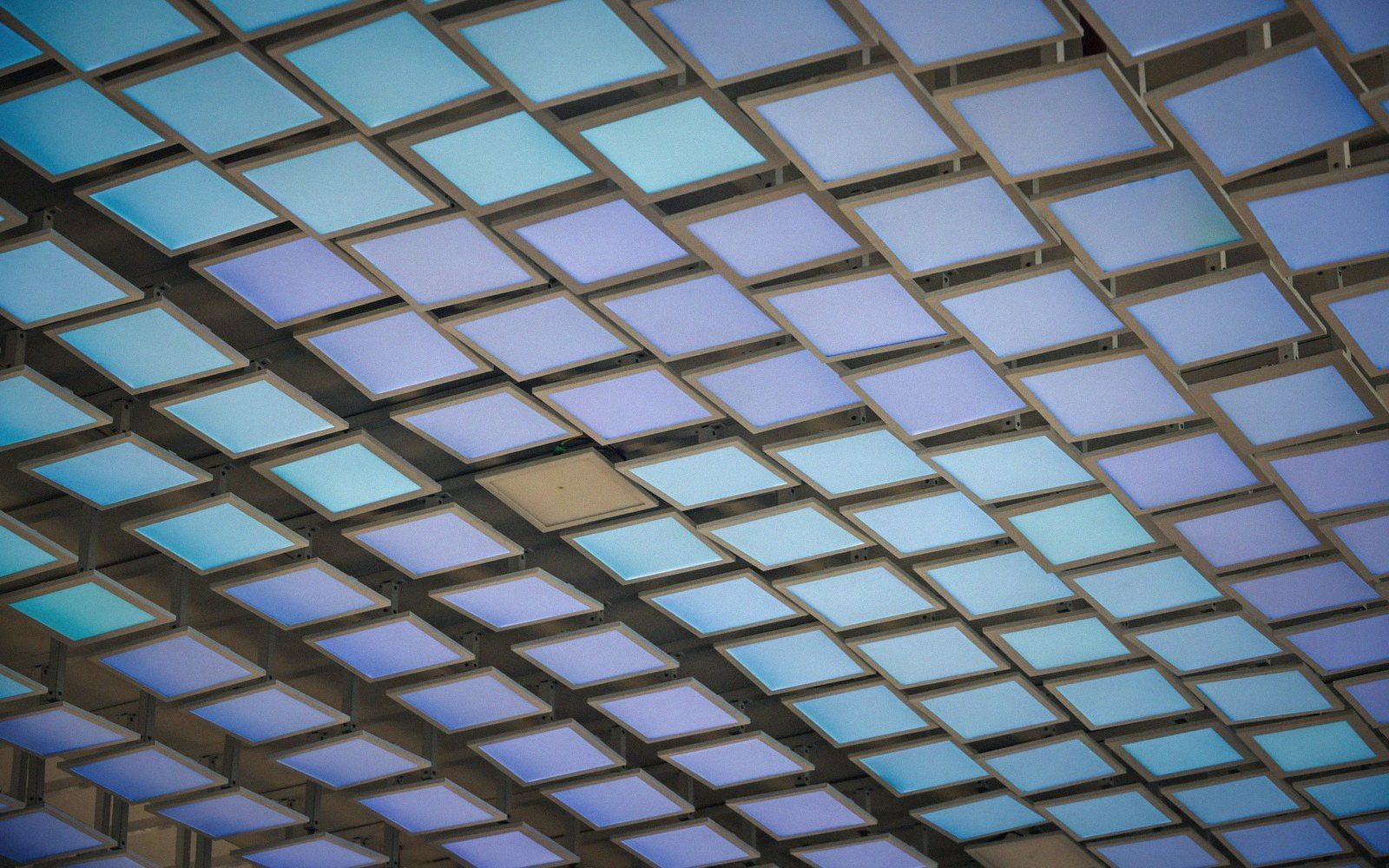
Fig. 01 · The zones are large relative to pixels, and the halo is where the approximation shows. · Photo: Magda Ehlers / Pexels
Zones of backlight approximating per-pixel control, and the halo that gives it away.
- The trade-off
- Fewer visible haloes against cost and processing complexity.
- Which way to spend
- Spend on zone count only if the room is dark.
Backlight zones, borrowed darkness, and the glow that betrays the compromise
A full-array LED LCD panel sits behind a sheet of liquid crystal. The liquid crystal can block light, but it cannot block it completely — the black level it can achieve is always limited by how much light the backlight is throwing behind it.
Local dimming is the industry's structural answer to that problem: instead of one uniform backlight, divide it into zones, and dim the zones behind dark parts of the image independently. The result approaches, but never reaches, the per-pixel control that an emissive technology has by design.
How zoning works, and where it breaks
The arithmetic is straightforward. A panel with sixty-four backlight zones is dividing its illuminated area into sixty-four independently controllable regions. A panel with a thousand zones is finer-grained. Each zone covers many pixels — often thousands — so the dimming decision is made for an area, not for a point.
When a single bright object sits against a dark background, the zone containing that object stays lit; the surrounding zones dim. The panel's measured contrast in that frame improves dramatically over what a global backlight could manage.
The artifact that gives away the compromise is the halo. Because a zone's edges are not optically hard — the backlight diffuses through the panel's optical stack before it reaches the liquid crystal layer — light bleeds outward from the lit zone.
A white subtitle on a black screen produces a faint luminous rectangle around the text, clearly visible once you know to look. Finer zoning reduces the size of the halo but cannot eliminate it; even very dense arrays are still producing one zone per many pixels, not one zone per pixel. The halo shrinks; the physics does not change.
The dimming algorithm compounds the halo problem in a second way. Because the backlight change must be coordinated with the pixel value, the panel's processor is making a predictive decision: set the backlight for this zone, then set the liquid crystal to compensate for whatever the backlight is doing.
If the content changes faster than the dimming algorithm anticipates — a bright object moving across a dark scene — the zone can lag, producing a trailing bloom or a brief crush of shadow detail.
Some implementations are more aggressive (deeper dimming, more visible transitions) and some are more conservative (shallower dimming, less visible transitions but also less contrast benefit). There is no calibration that eliminates the trade-off, only a preference about which artifact you tolerate.

2
The only light in the room is the one being measured.
Photo: Tima Miroshnichenko / Pexels
Edge-lit panels — where the LEDs run along one or more sides of the panel rather than behind it — deserve a separate note.
They allow thinner chassis than full-array designs, but they sacrifice zoning resolution almost entirely. The diffusion path from edge to centre is long, and the zones are effectively stripes or quadrants rather than a genuine grid.
The contrast benefit is real in engineering terms and usually marginal in practice. For a room built around image quality, a full-array panel with dense zoning is the relevant technology; edge-lit local dimming is a commercial compromise aimed at cost and thickness.
What it means for the room
Local dimming interacts with the room in one important way: its benefit is only visible if the room is dark enough. The contrast improvement a dense local dimming array delivers is a reduction in the luminance floor of dark areas — that floor is lifted the moment ambient light in the room reflects off the screen.
A room with significant ambient light destroys much of the black-level advantage that local dimming was designed to create. The engineering hierarchy is room first, panel second: controlling the room's light matters more than the zone count on the spec sheet.
The honest position on local dimming is that it is a real improvement over a uniform global backlight, meaningful in a properly dark room, and an incomplete substitute for emissive per-pixel control.
Understanding the halo as an inevitable geometric consequence — not a manufacturing defect or a firmware bug — is the prerequisite for both evaluating a panel and positioning it correctly in a room.
Lifted out of the flow — Panels
The core trade-off

Every reading is taken off the panel itself, in the light the room will actually have.
Photo: Alexander Dummer / Pexels
They allow thinner chassis than full-array designs, but they sacrifice zoning resolution almost entirely.
Lifted out of the flow — Panels