Nulls and Peaks
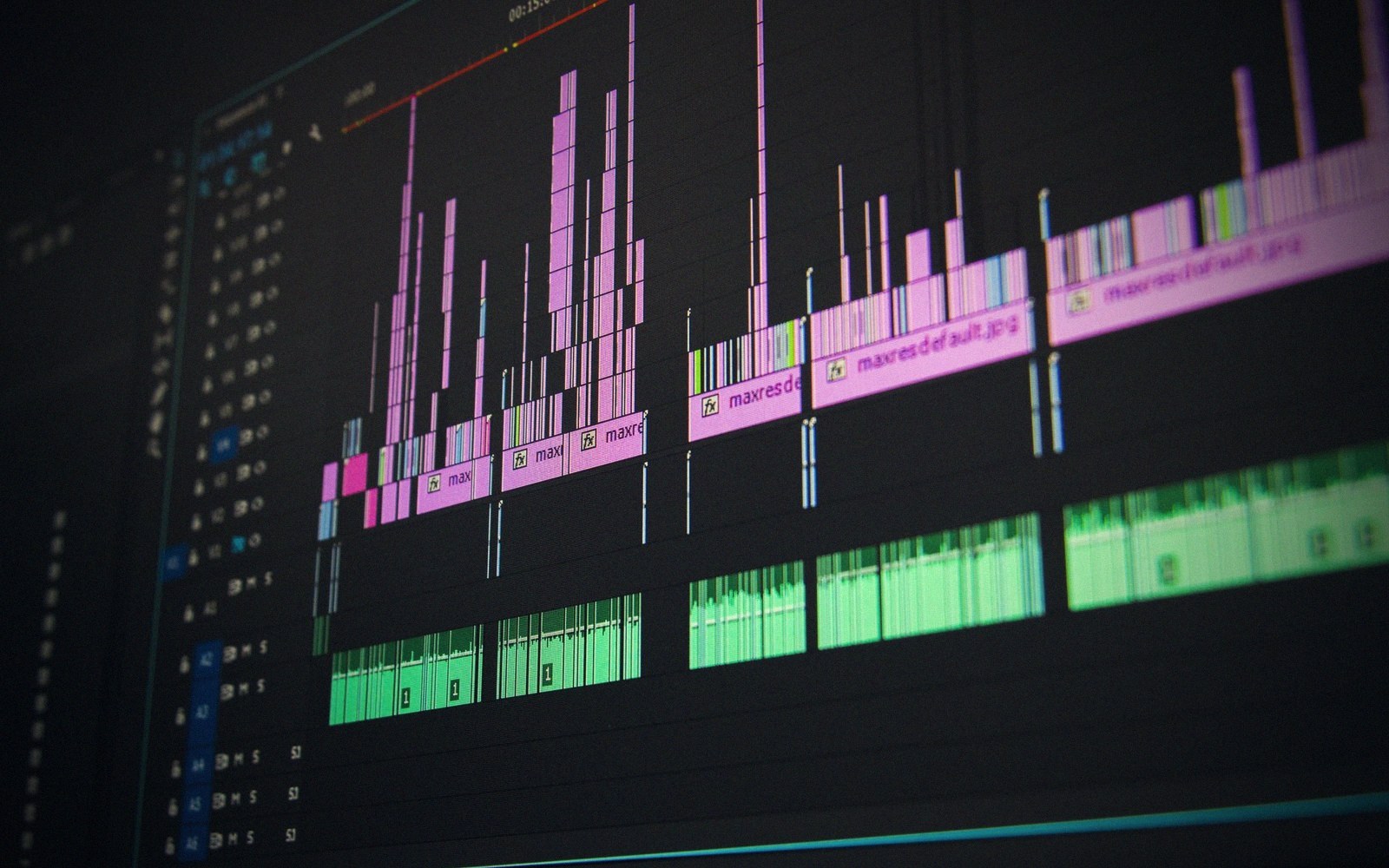
Fig. 01 · Move the seat a metre and the bass changes completely. Nothing is broken. · Photo: Pixabay / Pexels
Move your seat a metre and the bass changes completely. Nothing is broken.
- The trade-off
- A peak can be trimmed; a null cannot be filled.
- Which way to spend
- Spend on moving things, not on adding level.
The Room Is the Instrument
Bass at low frequencies behaves nothing like the midrange or treble you can treat with a panel on the wall. Below roughly 300 Hz, wavelengths stretch from just over a metre up to the full length of a typical room and beyond.
At those scales, the room itself becomes the instrument — its dimensions dictate where energy accumulates and where it cancels, and the seat you chose for comfort sits somewhere inside that three-dimensional pattern whether you planned for it or not.
The mechanism is simple. Any wave travelling from a subwoofer toward a wall reflects back toward the source. Where the outgoing and returning waves arrive in phase — crests lining up with crests — they add together, and you hear a peak.
Where they arrive out of phase — a crest meeting a trough — they cancel, and you hear what the field calls a null: a frequency that all but vanishes at that point in space, even though the amplifier is driving it at full output.
Move one metre in any direction and the phase relationship shifts; the peak may become a null, or vice versa. Nothing is wrong with the equipment. The room has a geometry and the geometry has consequences.
Rectangular rooms — the overwhelming majority of dedicated listening spaces — produce the most predictable version of this. Each pair of parallel surfaces generates its own series of standing waves at frequencies determined by the distance between them.
The lowest of these, the axial modes, sit on a single axis: length, width, or height. A room 5 metres long will have an axial mode at roughly 34 Hz, its first harmonic at 68 Hz, and so on.
The width and height produce their own series. When a mode from one axis coincides with one from another, the peak at that frequency is disproportionately strong.
When they nearly coincide, the peaks cluster together and leave a gap — an absence of modal support — at nearby frequencies. That clustering and those gaps are why some notes seem to bloom and others disappear.
2
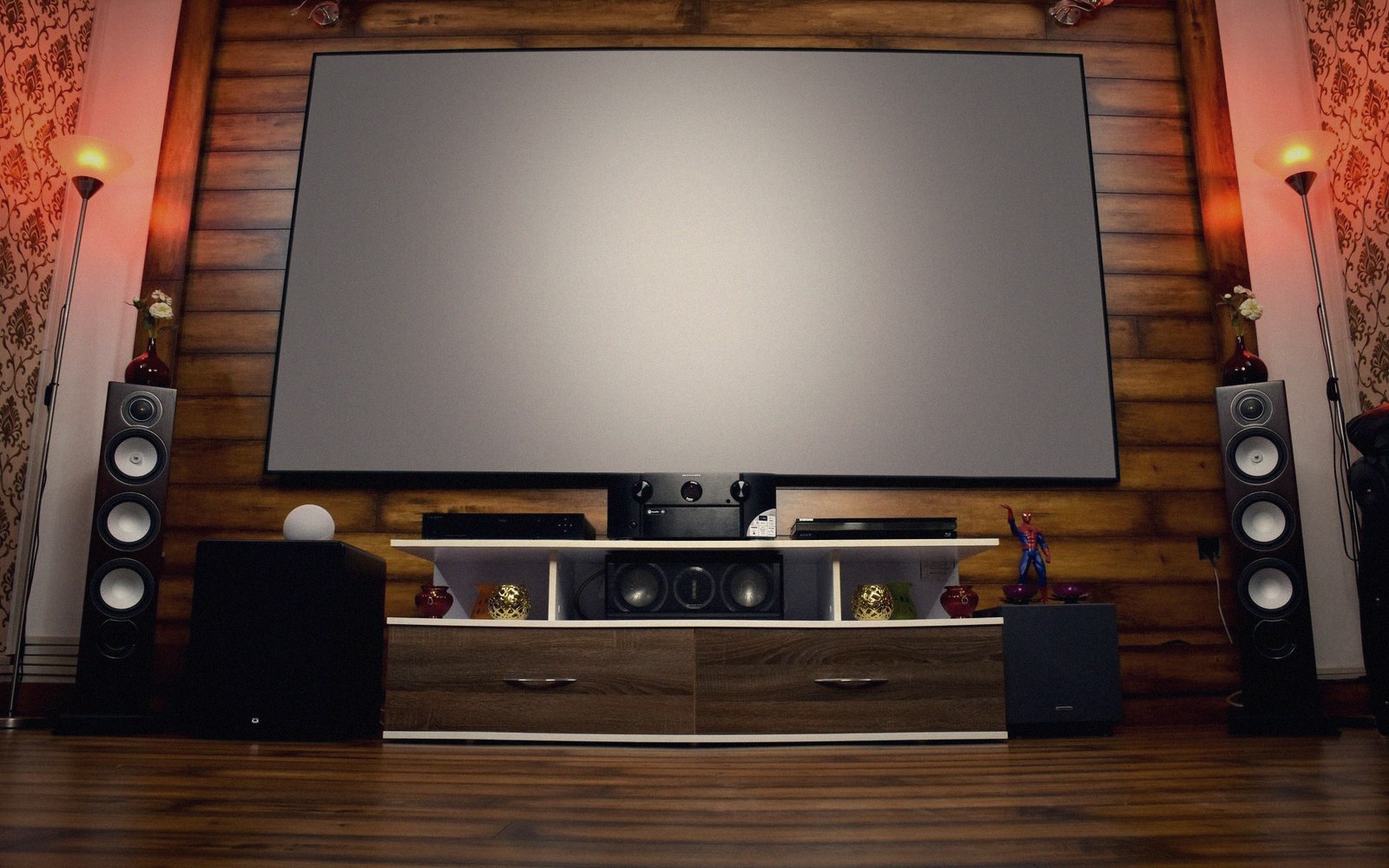
A corner loads the room hardest — useful for level, unhelpful for evenness.
Photo: Avinash Kumar / Pexels
What You Hear and Where
The practical consequence is that bass is not a quality of the subwoofer; it is a property of the room-and-position system. A null at your listening seat can measure 20 dB below flat — an enormous deficit, audible as a specific note in a bass line simply going absent.
A peak can measure 10 dB or more above flat, making the same note feel bloated and one-note, masking the harmonic detail above it. Both are generated by the room, not by the driver.
This is why a standing wave analysis of the room before you fix the seating position is genuinely useful rather than academic. Knowing where the axial modes fall tells you which frequencies to watch and where the pressure antinodes — the peaks — will concentrate.
In a rectangular room, bass pressure tends to pile up in the corners and at the wall surfaces. The geometric centre of the room is usually a null for every axial mode whose half-wavelength matches the room dimension, because that is exactly where cancellation is most complete. Sitting dead centre on the length axis sounds thin for this reason.
Moving the seat is often the most powerful single intervention available. Even half a metre of lateral or fore-aft adjustment can shift a null 6–8 dB, because you are physically relocating yourself within the modal pattern.
It costs nothing and needs no hardware. Only after position is optimised does electronic correction — parametric equalisation applied to peaks, not nulls — become worthwhile. EQ can reduce a peak by cutting gain at that frequency, which brings it into balance without fighting physics.
A null, by contrast, cannot be fixed with EQ: adding gain at a cancelled frequency only asks the amplifier to drive harder into a void, raising distortion and power consumption without recovering the missing energy at the seat.
Lifted out of the flow — Bass
Numbers worth setting apart
Room treatment can reduce the amplitude of the modes themselves — thick, dense absorption placed at pressure antinodes, typically corners — but at these frequencies, effective absorption requires material depths that are genuinely impractical for most domestic rooms.
Moving the seat and, if the layout allows, repositioning the subwoofer relative to the room boundaries will always do more than a thin panel of foam.
The sequence, then: measure, move the seat, move the source, then absorb where you can, then correct electronically only what remains.

The only light in the room is the one being measured.
Photo: Tima Miroshnichenko / Pexels
The lowest of these, the axial modes, sit on a single axis: length, width, or height.
Lifted out of the flow — Bass