Bit depth and banding
Fig. 01 · Visible steps in a gradient are a depth problem, not a panel fault. · Photo: Codioful (formerly Gradienta) / Pexels
Visible steps in a smooth gradient are almost never a panel fault — they trace back to where the numbers ran out.
- The trade-off
- Bandwidth and processing headroom against smooth gradients.
- Which way to spend
- Spend on the source and the link, not the panel.
What the numbers actually do
Every pixel in a digital image is assigned a numerical value per colour channel. Eight bits per channel gives 256 discrete steps from black to white; ten bits gives 1,024; twelve gives 4,096. A smooth gradient — a deep blue sky shading into white near the horizon — needs enough steps that adjacent values are too close together for the eye to distinguish.
With 8-bit encoding, a gently graded sky might span only forty or fifty steps across the whole image. That is narrow enough that each step becomes a visible band: posterisation, or banding.
The critical point is where the bit depth gets constrained. A 10-bit panel can do nothing useful if the signal arrives as 8-bit, already banded before it reaches the screen.
Conversely, a processing stage that reduces 10-bit source material to 8-bit for convenience — a scaler, a receiver, a poorly configured HDMI handshake — will bake the banding in. The panel then faithfully reproduces the damage. Suspect the chain, not the screen.
HDR compounds this: the extended luminance range means gradients span a far greater perceptual distance, so the number of steps required to keep transitions invisible rises sharply.
HDR10 specifies 10-bit encoding for exactly this reason. Send HDR content through an 8-bit bottleneck and the banding can be dramatic, appearing in mid-tones and highlights that 8-bit standard dynamic range would never have touched.
2
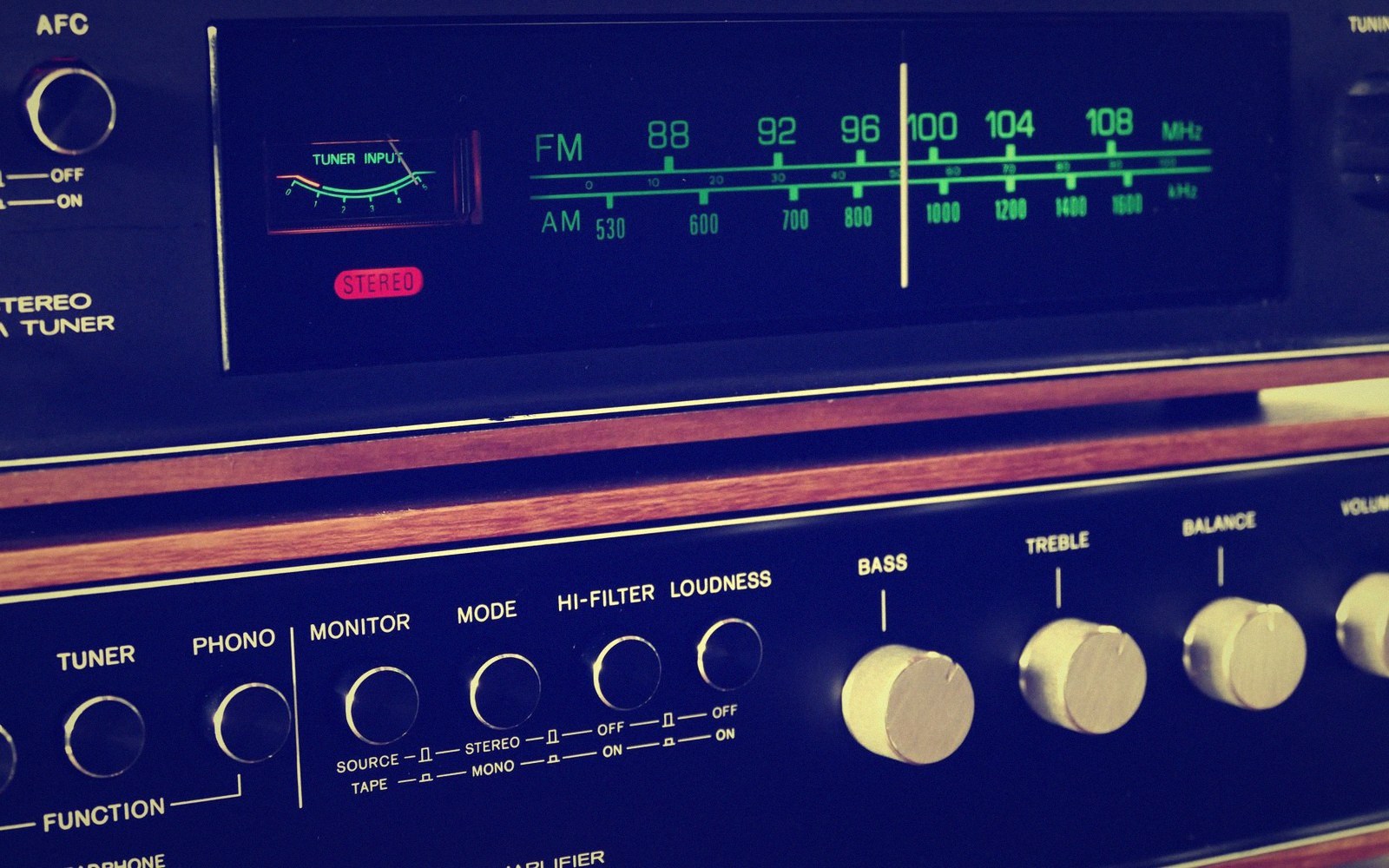
The last part of the chain worth worrying about, and the first part most people change.
Photo: Anthony 🙂 / Pexels
Some panels and processing chips apply noise to soften the boundaries between steps — temporal or spatial dithering — which can make 8-bit source material look smoother, at the cost of a slight grain.
This is a legitimate technique, not a fault. But dither masks banding; it does not cure the information loss. The right answer is preserving bit depth through the entire signal chain, from encoder to display, without any stage quietly rounding numbers down.
Lifted out of the flow — The Chain
Key relationships
Visible steps in a gradient are a depth problem, not a panel fault.
Photo: Pew Nguyen / Pexels
The right answer is preserving bit depth through the entire signal chain, from encoder to display, without any stage quietly rounding numbers down.
Lifted out of the flow — The Chain