Contrast beats resolution
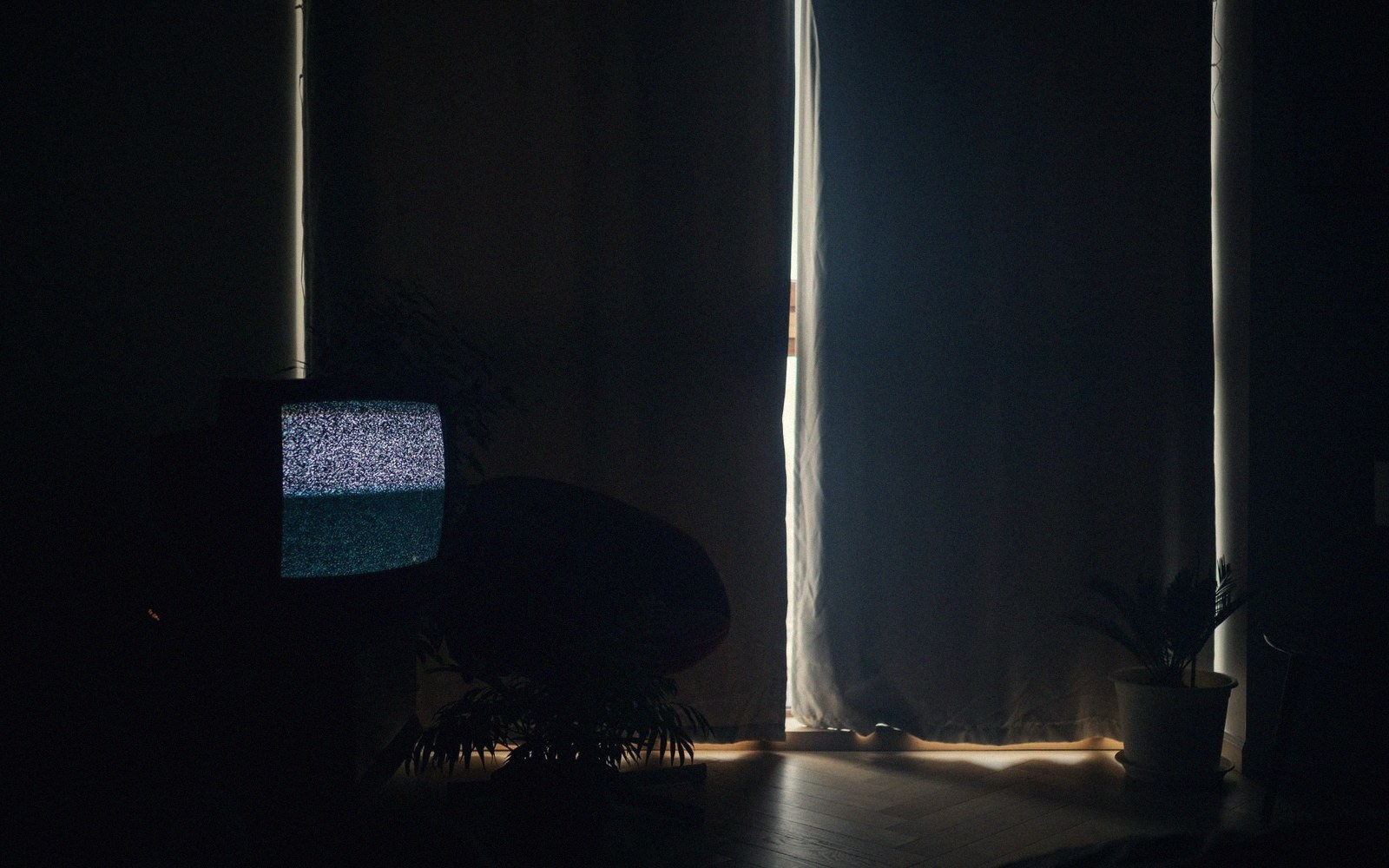
Fig. 01 · Dark material is where a display’s real capability shows; a lit room hides it. · Photo: Ron Lach / Pexels
The number that sells a display is not the number that makes the picture.
- The trade-off
- Pixel count against dynamic range, at a distance where the eye can only use one of them.
- Which way to spend
- Spend on black level and on controlling the light.
The limit lives in your eye, not the panel
Stand two metres from a 65-inch screen and ask yourself what you can actually resolve. The answer is governed by the angular resolving power of the human eye — roughly one arc-minute per line (two arc-minutes per line pair) under ideal conditions.
Do the geometry and a 4K panel at that distance is already near the edge of what most adults can distinguish from 1080p; push the seat back to three metres and the two are perceptually indistinguishable for the majority of viewers.
These are not controversial figures — they fall directly out of the spatial-frequency limits established by vision research going back to the middle of the twentieth century. The extra pixels are real. The extra detail you perceive is, mostly, not.
Contrast is a different conversation. The eye is extraordinarily sensitive to luminance ratio — the relationship between the brightest thing in a frame and the darkest. That sensitivity does not decay with viewing distance the way spatial acuity does.
A black that is genuinely black reads as dimensionality, depth, weight. A black that is actually a dark grey reads as flatness, regardless of how many pixels are describing it. This is not preference or audiophile mysticism; it is the basic physiology of the visual system, which encodes luminance differences logarithmically and responds to them over an enormous dynamic range.
The practical consequence is stark. Upgrade from a display with poor black-level performance to one with excellent black-level performance and the picture changes immediately, visibly, in a way that requires no critical-viewing training.
Upgrade from 1080p to 4K at a normal seating distance and the same scene looks, to most viewers in most rooms, almost identical. The resolution upgrade is real in a spreadsheet. The contrast upgrade is real in the room.

2
A grey-scale run read off the panel rather than off the menu.
Photo: Tima Miroshnichenko / Pexels
What contrast actually measures — and what it does not
A quoted contrast ratio is a ratio of two luminance measurements: the panel at full white, and the panel at full black. The headline figure — 10,000:1, 1,000,000:1, "infinite" — sounds definitive.
It is not. Quoted ratios are measured under conditions that do not resemble a living room: in a darkened lab, sequentially, one frame of white then one frame of black, with no ambient light and sometimes with the backlight modulating between the two measurements.
Real material is simultaneous — bright and dark pixels coexist in the same frame, at the same instant, on the same panel. The number on the box describes a best-case scenario you will rarely encounter and cannot reproduce.
What the number does gesture toward is the underlying physics of the panel technology. An emissive panel — one where each pixel generates its own light — can turn fully off per-pixel, which means adjacent bright and dark regions coexist without the bright region contaminating the dark one.
A transmissive panel filters a backlight; the backlight illuminates even the pixels meant to be dark, and the filter is imperfect. These are not implementation failures; they are consequences of the physics, and whether each pixel makes its own light or filters a backlight is the most consequential single fact about a display's contrast ceiling.
Local dimming — subdividing the backlight into addressable zones — moves transmissive technology toward emissive behaviour, but the zones are large relative to pixels, and the halo around a bright object on a dark background reveals the approximation.
The room makes this worse in ways the spec sheet never mentions. Any ambient light in the viewing space adds a uniform luminance offset to everything the screen emits.
The white gets slightly brighter; the black gets very much brighter; the ratio collapses. A panel with a measured on/off ratio of 5,000:1 in a dark lab may deliver an effective ratio of 200:1 or less in a room with a table lamp on the other side.
Any light in the room raises the floor and throws the ratio away. This is why a modestly specified projector in a fully darkened room can outperform an expensive flat panel in a partially lit one: the panel's native black never had a chance.
Lifted out of the flow — Contrast
The geometry behind the claim
Resolution and the resolution of perception
There are contexts in which resolution matters. Close viewing — a monitor at a desk, a tablet in the hand — is the clearest case, because the angular size subtended is large and the eye's spatial acuity is actually in play.
Very large screens at moderate distances begin to close the gap. Content that was shot and finished at high resolution, with fine detail in the frame, benefits from a panel that can render it faithfully. These are real advantages.
But most home-cinema content is mastered for distribution, not for pixel-peeping. Film grain, digital noise, motion — persistence and sample-and-hold already limit what you can see in a moving image — all reduce the effective resolution of the signal before it reaches the panel.
A 4K encode of a film shot on 35mm contains real resolution the format can deliver, but it also contains emulsion grain and optical aberrations that set a practical ceiling well below the pixel grid.
The panel is rarely the limiting factor. The signal is. The optics of the original capture are. Your eyes and your distance are.
Contrast has no equivalent ceiling in the content. HDR (High Dynamic Range) material is graded with an explicit intent: the colorist specifies the peak white and the near-black and expects the display to honour both.
When the display cannot render a deep black — because its panel physics prevent it, or because the room is lit — the whole luminance hierarchy shifts upward.
The shadows compress. The specular highlights can no longer be set apart from the mid-tones because the mid-tones have nowhere below them to sit. The image loses not just depth but the internal luminance relationships that the grade was built around.

The reflection points are found geometrically: sit down, and mark every place a driver appears.
Photo: cottonbro studio / Pexels
This is the trade-off that matters most and is least often stated plainly: a high-resolution image with compromised blacks looks flat. A moderate-resolution image with excellent black-level performance looks three-dimensional and present.
The eye resolves the depth from contrast cues before it resolves the texture from pixel density. Black level is the foundation that every other image parameter is built on — and what the panel does when it is asked to show nothing is more revealing of its real capability than any peak brightness or pixel count figure.
Spend your room-engineering effort accordingly. Control the ambient light before worrying about the signal path. Choose a panel technology on the basis of its native black-level physics before counting pixels.
Treat the walls and windows so that room reflections do not add a grey wash across the image. These decisions change the picture. Pixel count, at normal seating distances in real rooms, largely does not.
Lifted out of the flow — Contrast