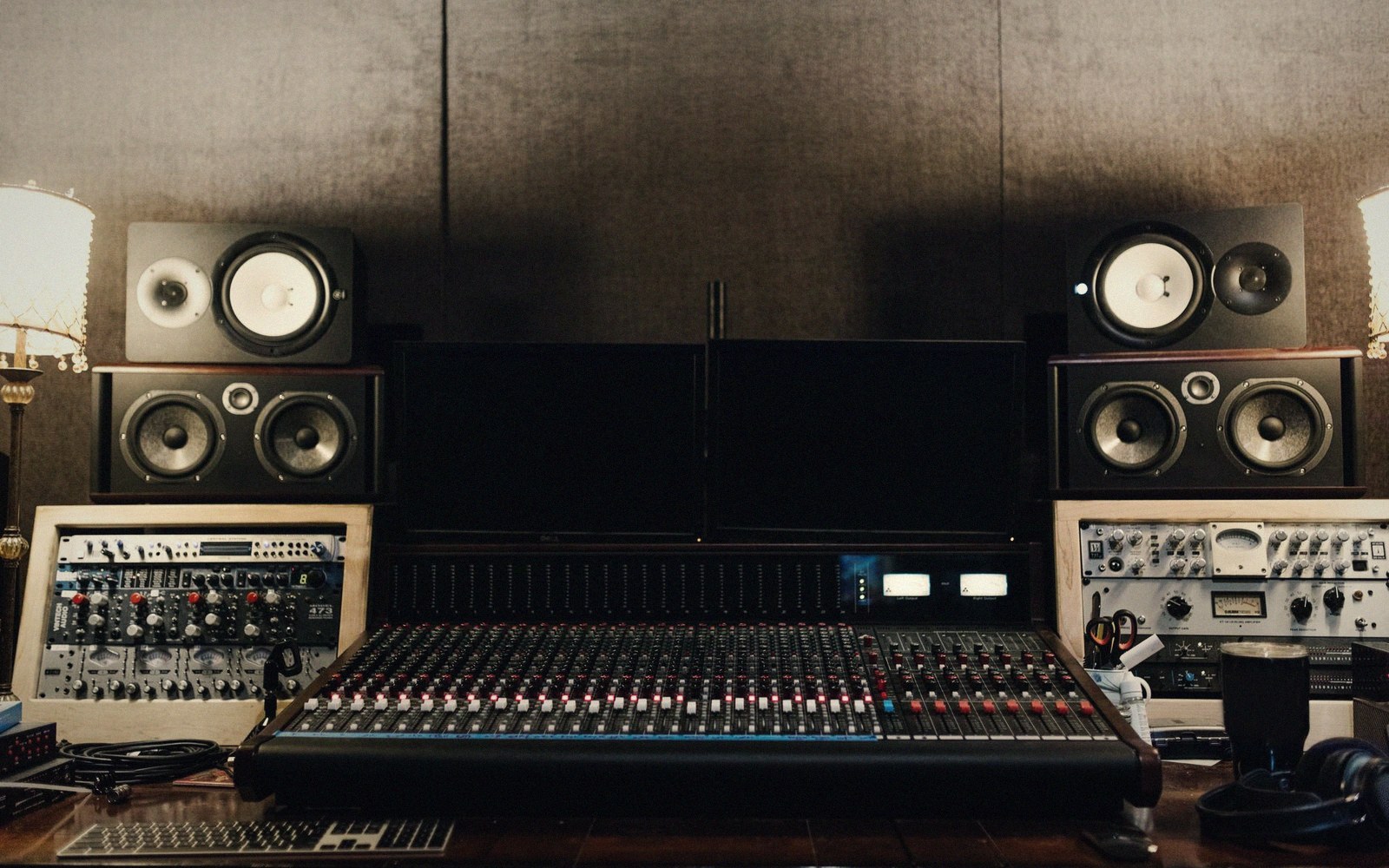
First Reflections
Fig. 01 · The earliest reflected arrivals are the ones that smear the image. · Photo: RDNE Stock project / Pexels
The earliest reflected arrivals smear the image. Find them with a mirror and a second person.
- The trade-off
- A live-sounding room against a precise one.
- Which way to spend
- Spend on the first points, then stop.
The sound that arrives just after the sound
Every acoustic treatment guide eventually tells you to deal with first reflections, and almost none of them explain why they matter more than later reflections. The reason is timing. A direct sound leaves the speaker and reaches your ears.
A few milliseconds later — typically between five and thirty milliseconds depending on room dimensions — the same sound arrives again, having bounced once off a wall, ceiling or floor.
Your auditory system cannot separate the two arrivals; it fuses them. The result is not perceived as an echo. It is perceived as smear: a thickening of transients, a blurring of stereo width, a loss of the precise imaging that good speaker placement builds. Fix the direct-to-reverberant ratio everywhere else in the room and leave the first reflections alone, and the image never firms up.
The physical principle is Haas fusion — sometimes called the precedence effect. Below roughly thirty milliseconds of delay, the brain accepts the later arrival as part of the first, assigning the combined sound to the location of the earliest arrival.
The direct sound wins the location contest, but the reflected copy degrades the tonal and spatial information riding the original wavefront. This is why first reflections are treated differently from later, more diffuse reverb: they are discrete enough to corrupt the image but arrive too soon to be heard as separate events.
Diffusion can scatter later reflections usefully; the first reflection needs to be absorbed or deflected before it reaches the listener at all.
2
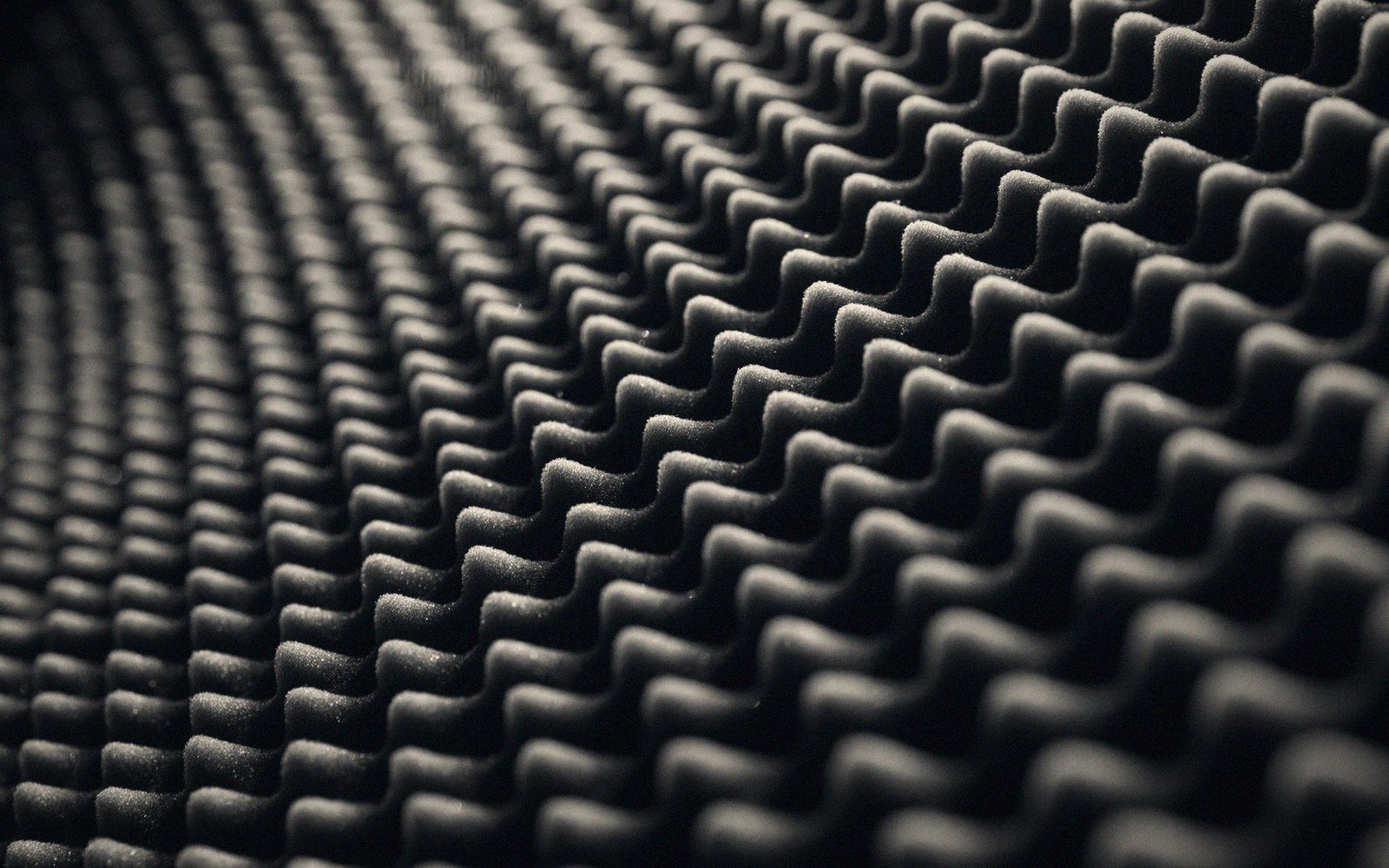
Absorption goes where the mirror shows a driver, not where there is a convenient gap.
Photo: Guillaume Meurice / Pexels
Finding them, then fixing them
The mirror trick is not folklore. It works because sound and light obey the same law of reflection — angle of incidence equals angle of reflection — so if you can see the speaker in a mirror held flat against the wall, a sound launched from the tweeter will bounce from that exact point toward the listening seat.
You need one person seated at the listening position and a second person walking the side wall with a hand mirror held flat against its surface. Every point on the wall where the seated listener can see a speaker in the mirror is a first-reflection point.
Mark them all. Then repeat the exercise for the ceiling, moving the mirror along the ceiling above the path between speaker and seat. The floor between the speaker and chair is a reflection point too, though a thick rug usually handles it without further intervention.
What you find is typically a patch on each side wall roughly level with, or somewhat ahead of, the listening seat, and a region of ceiling between the speakers and the seat. For a conventional stereo triangle these patches are often smaller than people expect: a sixty-by-sixty centimetre panel of absorptive material placed accurately does more than a wall covered loosely in foam.
The operative word is placed: position is everything. A panel half a metre from the correct point achieves very little. The mirror method earns its keep precisely because it removes the guesswork.
The absorptive panel needs to work across the frequency range where imaging information lives — broadly two hundred hertz to four kilohertz. Rigid fibreboard, mineral wool and open-cell acoustic foam all perform in that band if the material is thick enough: fifty millimetres of medium-density mineral wool is a reliable minimum.
Thinner materials lose effectiveness below one kilohertz and leave the lower midrange uncorrected, which is exactly where male voice and cello fundamentals sit. The panel does not need to extend to the floor; it needs to sit at reflection height.
Lifted out of the flow — Treatment
Method
Some rooms substitute a small diffuser at the side-wall positions — particularly in home cinema where a wide listening group needs consistent treatment across several seats.
Diffusion at the first reflection scatters the arrival rather than removing it, which is a reasonable compromise when a single absorption point cannot serve a spread of listeners simultaneously. But in a dedicated two-seat stereo arrangement, absorption wins: it removes the corrupting arrival entirely rather than softening it.
The ceiling reflection is the one most often forgotten. It arrives at nearly the same delay as the side-wall reflection and degrades imaging in the vertical plane — height information, if you have an immersive audio format that carries it, and the perceived size of the sound source.
A cloud panel — an absorptive tile suspended horizontally above and slightly in front of the listening seat — handles it without touching the walls at all.
Absorption goes where the mirror shows a driver, not where there is a convenient gap.
Photo: Guillaume Meurice / Pexels
The panel does not need to extend to the floor; it needs to sit at reflection height.
Lifted out of the flow — Treatment